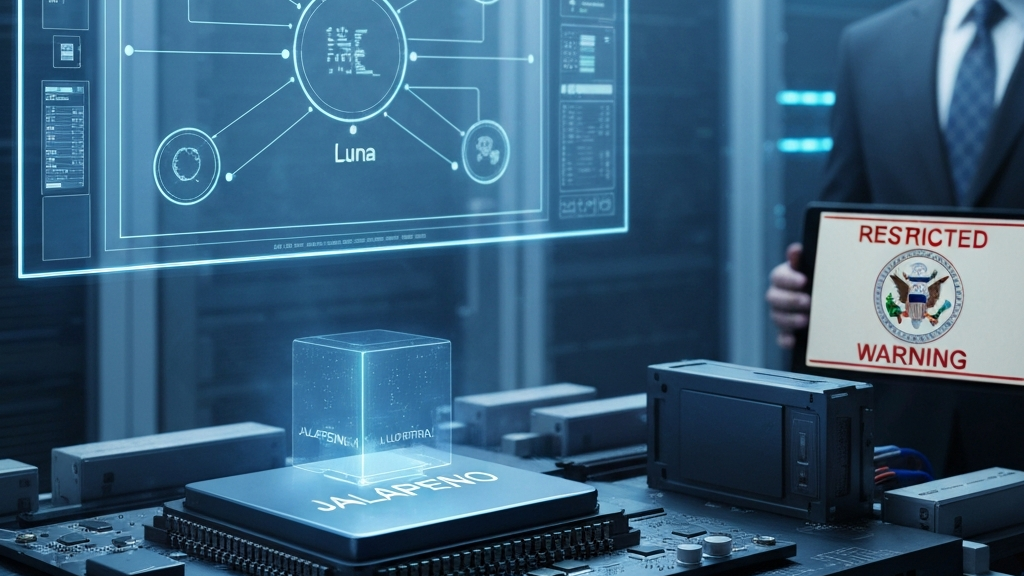
The GPT 5.6 Sol Release
OpenAI released a new model family. This is not a normal release. The GPT 5.6 Sol model is only for a small group of companies. The US government asked to limit access. OpenAI agreed to this. This shows that advanced AI is becoming a strategic technology. Companies must prepare for new rules.
At AI w Biznesie, we follow these changes. We help companies adjust to the new reality. GPT 5.6 is not just a better model. It is a sign that the future of AI will depend on rules and hardware. In this article, we explain what this means for your business.
The GPT 5.6 family has three models. Sol is the top model with the most power. Terra is a balanced model for daily work. Luna is a fast and cheap option for big tasks. Each model has a different use and price. This lets companies pick the right tool.
This release changes how we think about AI. It is no longer just a tool. It is a resource that governments want to control. Companies that understand this will have an edge. Those that ignore it may fall behind.
New Abilities of the Sol Model
The Sol model is the strongest model OpenAI ever made. It gets the best results in coding, biology, and security. On the Terminal Bench 2.1 test, Sol set a new record. This means the model works well with agent tasks. AI agents can now act faster and better.
Sol is also better than its older version GPT 5.5 in biology tests. It uses fewer tokens to do this. This directly leads to lower costs. For research companies, this is a big saving. The model can speed up work on new drugs and treatments. For example, a lab can test thousands of ideas in hours instead of weeks.
Max and Ultra Modes
Sol adds two new ways to work. Max mode is for deeper thinking on hard problems. The model spends more time on each step. Ultra mode works with many sub-agents. The system splits a big task into smaller parts. Each agent works on its own piece. Then the results are joined together.
This is a breakthrough for coding companies. Instead of one model trying to do everything at once, the system manages many agents. This boosts speed and accuracy. But Ultra mode can use a lot of tokens. Companies must watch their costs. A good rule is to test with small tasks first.
For example, a team building a new app can use Ultra mode. One agent writes the code. Another checks for errors. A third tests the app. This makes the work faster and safer.
Model Family: Sol, Terra, and Luna
OpenAI made three models for different needs. Sol costs 5 dollars for one million input tokens and 30 dollars for output. This is the model for the hardest tasks. Terra costs 2.50 dollars for input and 15 dollars for output. This is a good pick for daily professional work. Luna costs only 1 dollar for input and 6 dollars for output. This is perfect for big operations.
A new feature called prompt caching lowers costs for repeated questions. Data in the cache stays for 30 minutes. Reading from the cache gives a 90 percent discount. This is great news for companies using AI agents. They can use the same context many times without extra cost. For instance, a customer service bot can cache common questions and save money.
The price differences let companies match each task to the right model. Simple tasks can use Luna. Complex tasks can use Sol. This saves money and improves results.
US Government and New Limits
This model release is different from past ones. OpenAI gave Sol to only about 20 partners. The reason is not server capacity. The US government directly asked to limit access. OpenAI agreed to these terms. This sets a new rule in the AI industry.
The Trump administration acted the same way with the company Anthropic. The government forced limits on the Fable 5 and Mythos 5 models. Anthropic finally removed Fable 5 completely. This started a talk about national safety. Is the government making an unofficial AI license system? Many companies fear that this is true.
This change affects how fast new tools reach the market. Companies now must plan for delays. They need to build trust with regulators. This is a new part of AI business.
A Precedent for AI Future
Dean Ball, a former AI advisor in the White House, warns about this new system. A Trump executive order asks companies to report their top models for review. But when this process becomes expected, it is no longer voluntary. Companies can get stuck in delays. This hurts US competitiveness.
OpenAI works with the government but does not hide its worries. The company says limited access keeps the best tools away from users. Developers, businesses, and security experts lose access to new tech. This slows innovation and weakens the US position in the global market. For example, a startup that needs the latest AI for security work may have to wait months.
This new rule may spread to other countries. Governments in Europe and Asia could follow the US example. This would make the AI market more complex.
Safety and Threat Classification
OpenAI classified the Sol, Terra, and Luna models as high ability in security. This means the models can be used for both defense and attacks. But Sol does not reach a critical level for self-improvement. In tests, the model could not do a full attack on its own.
OpenAI built safety tools directly into the model. These are not outside filters. They are part of the system core. The model automatically says no to dangerous tasks. A real-time classifier system also works. Some questions may be slowed down or blocked. This stops misuse.
For instance, if someone asks for help to make a computer virus, the model refuses. If someone asks for a safe way to check a network, the model helps. This balance is key for safe AI use.
OpenAI’s Own Chip – Jalapeno
At the same time, OpenAI showed its first own AI chip. It is called Jalapeno. This is not a chip for training models. It is a chip for running models for users. Every message in ChatGPT and every task in Codex needs this. It is a costly process.
OpenAI built Jalapeno with help from Broadcom. Broadcom makes the silicon and the connection tech. Celestica will build the server systems. Greg Brockman from OpenAI says the chip was made in 9 months. This is the fastest cycle for such a complex chip. For example, building a chip usually takes 18 to 24 months. Nine months is a new speed record.
Feedback Loop of AI and Chips
The most interesting part is how they designed the chip. OpenAI used its own AI models to speed up the work. The models found improvements in parts already made by humans. This creates a powerful loop. AI models help make better chips. Better chips make models cheaper and faster. Cheaper models attract more users. More users bring more money for the next chip generation.
Early tests show about 50 percent cost savings. This is a big difference for companies using AI. Lower running costs mean cheaper services for clients. OpenAI can offer more for less money. This changes the rules of the game. A business that uses OpenAI chips can save thousands of dollars each month.
This loop also speeds up new ideas. Each chip generation makes AI smarter. Smarter AI then designs even better chips. This cycle can grow very fast.
Competition in the Chip Market
OpenAI is not the only company building its own chips. Google has seventh-generation TPUs. Amazon put in over one million Tranium processors. Microsoft started the Maya 200 accelerator. Meta has MTIA for internal tasks. The chip market is changing fast.
According to industry data, ASIC chip shipments will grow by 44.6 percent in 2026. Standard GPU shipments will grow by only 16.1 percent. Servers based on ASIC will reach 27.8 percent of the market. This shows that companies want their own solutions. Nvidia is still important, but competition is growing. For example, a company that uses Amazon’s Tranium may get better prices than one using Nvidia.
This trend gives buyers more choice. They can pick the chip that fits their needs best. This lowers costs and improves performance for many users.
What This Means for Business
The GPT 5.6 Sol release is a turning point for the whole field. First, the technology gets much more powerful. AI models can now do hard tasks on their own. Second, governments start to control access to these tools. Companies must know about new rules. Third, hardware becomes key. Own chips lower costs and increase freedom.
At AI w Biznesie, we help companies move through this new world. We offer solutions made for each need. Our experts follow changes in rules and tech. This way, your company can use AI safely and well. You do not need to worry about following the law. For example, we help a retail company set up a customer AI that follows all new rules.
For companies, this means a few clear steps. First, test the GPT 5.6 family models. Luna is cheap and fast for daily tasks. Sol works best for hard projects. Second, watch rule changes. The US government may add new demands. Third, think about your own hardware. Lower running costs give you a lead. A small business that plans ahead can beat bigger rivals.
The future of AI will depend on three things. Model power, government rules, and hardware. Companies that see these links will lead. Those that miss the changes may stay behind. At AI w Biznesie, we are ready to help you in each of these areas. Contact us to learn more.
GPT 5.6 Sol is just the start of a new era. An era where AI is a strategic tool. An era where own chips decide costs. An era where rules shape the market. Be ready for these changes. With us, you will be one step ahead of competitors.

No responses yet