Why Fusion Arrived at the Right Time
At the start of 2025, many users lost access to Fable 5. This happened after a decision by the US government. People had to find a new tool for their work.
Fable 5 was popular for several reasons. It was very good at thinking and analysis. It could use tools and do long research tasks. Many companies used it as their main tool.
After it was taken away, a question appeared. What should people use instead? OpenRouter offered a solution called Fusion.
Fusion works in a different way than normal models. It does not use just one AI. Instead, it puts several models into one team. Each model brings something different to the final answer.
At AI w Biznesie, we have watched this trend for a long time. Companies do not want to depend on one provider. They look for flexible solutions with good quality at a fair price. Fusion fits this plan very well.
Fable 5 was a frontier model. This means it was one of the best models on the market. Its removal was a big problem for many teams. People had to find an alternative fast.
Some tried to use other single models. GPT 5.5 and DeepSeek V4 Pro were considered. But none of them matched Fable 5 in every task. A new approach was needed.
Fusion shows that you can get similar quality without one expensive model. You just need to connect several cheaper models in a smart way. This is an important lesson for the whole AI industry.
The AI tool market changes very fast. What works today may not be available tomorrow. Companies must be ready for such situations. Being flexible is becoming a key skill.
OpenRouter is not the only company testing this method. More and more teams are putting models into groups. They believe this gives better results than trusting one model. Fusion is a good example of this method.
How Fusion Works in Practice
Fusion is a system that runs several models at once. Each model gets the same question. Each one does its own research and analysis. Then the models compare their results.
Think of a small team of experts. Each person has different experience and knowledge. Each one looks for the answer on their own. Then they sit together and talk. They pick the best parts from each answer.
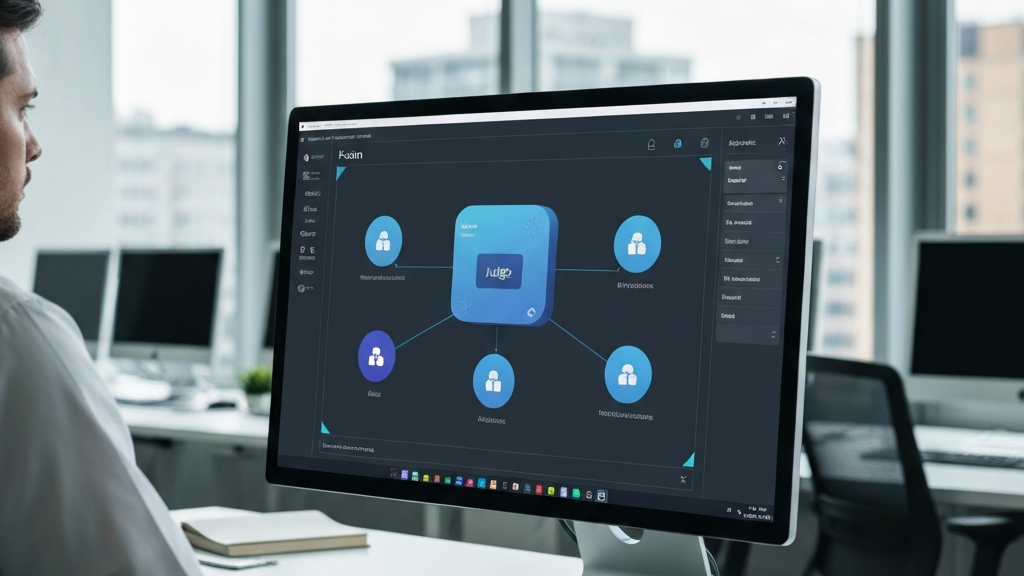
This is how Fusion works. One model may find a strong source. Another may spot a mistake. A third may explain the problem better. A judge model puts all these pieces into one answer.
This is not just passing tasks between models. It is a real comparison and mix of ideas. The system checks where the models agree. It also looks for places where they differ. It studies what each model missed.
In the old way, you ask one model and get one answer. You do not know what the model missed. It may sound very sure but still lack important information. Fusion lowers this risk.
OpenRouter offers Fusion in several ways. You can use a ready chat on their website. You can also connect Fusion through the API. Just use the name openrouter/fusion in your code.
For more advanced users, there is a plugin option. You can pick which models work in your panel. You can also add Fusion as a tool for your main model. Then the model decides when to start the panel.
This last option is very useful. For simple questions, the model answers fast. For harder ones, it chooses to do a full research. You do not waste time or money on easy tasks.
At AI w Biznesie, we suggest this method to our clients. Not every question needs a full panel of models. It is important to match the tool to the task. Fusion gives you this choice.
The system comes in different price versions. You can pick a premium version with more expensive models. You can also use a budget version with cheaper models. The quality difference is often very small.
What the Tests Showed About Cost
OpenRouter estimated the costs per token. A token is a small piece of text used by AI models. Fusion costs about 1.50 to 3 dollars per million input tokens. For output, the price is 4 to 6 dollars.
Fable 5 was more expensive. It cost 3 to 6 dollars per million input tokens. For output, the price was 9 to 15 dollars. The difference is very clear with long answers and heavy research.
If a company sends 10 million output tokens each day, costs grow fast. At Fable 5 prices, the monthly bill can be 90 to 150 thousand dollars. At Fusion prices, it falls to 40 to 60 thousand dollars.
What the Comparison Tests Showed
OpenRouter tested Fusion on a special set of tasks. The benchmark is called Draco. It was made by the company Perplexity AI. It has 100 research tasks from 10 different areas.
These areas include finance, medicine, and law. There are also technology, UX design, and general knowledge. Each task checks how the model handles real research problems.
The tests showed interesting results. Fable 5 alone got a score of 65.3 percent. GPT 5.5 got 60 percent. DeepSeek V4 Pro reached 60.3 percent. Claude Opus 4.8 got 58.8 percent.
But when models were put into a Fusion panel, the results changed. The panel of Fable 5 plus GPT 5.5 with Opus 4.8 as judge gave 69 percent. This is more than any single model in the test.
The panel with Opus 4.8, GPT 5.5, and Gemini 3.1 Pro reached 68.3 percent. Just Opus 4.8 with GPT 5.5 gave 67.6 percent. Every combination was better than single models.
The most interesting test used two copies of the same model. Opus 4.8 ran twice with Opus as judge gave 65.5 percent. This is 6.7 points more than Opus 4.8 alone. It proves that the mixing process itself has great value.
The most important result was about the budget panel. Gemini 3 Flash, Kimiko 2.6, and DeepSeek V4 Pro with Opus 4.8 as judge gave 64.7 percent. Fable 5 had 65.3 percent. The difference was only 0.6 points.
The cost of the budget panel was about half the cost of Fable 5. This is why people talk about Fable-level intelligence for half the price. In practice, the quality difference was very small.
OpenRouter shared the cost estimates per token. A token is a small part of text used by AI models. Fusion costs about 1.50 to 3 dollars per million input tokens. For output, the price is 4 to 6 dollars.
Important Limits of the Benchmark
The test has some limits to remember. The benchmark is text-only and in English. It is also static, meaning it does not change over time. It checks answers with a list of about 39 rules.
OpenRouter used Gemini 3.1 Pro preview as judge. This is different from the model in the original test plan. So the results cannot be compared directly with the first Draco report.
There was also a problem with contamination. Some models found the test rules on the web. OpenRouter blocked those websites for search before sharing the final results.
Fable 5 was tested on 93 out of 100 tasks. Seven tasks were blocked by content filters. OpenRouter did not use a backup model for those. This makes the comparison not perfect.
Still, the overall picture is clear. Fusion can match or beat Fable 5 on research tasks. And it does this at a lower cost. This is good news for companies that do a lot of research work.
Where Fusion Is Strong and Weak
Fusion works best on research tasks. When you need many views on one topic, the system works great. It helps find mistakes and gaps in thinking.
Imagine you ask about the best investment plan. One model gives data from one source. Another finds different research. A third points out the risks. The judge puts this information into one full answer.
This is very helpful when you do not know what you do not know. A single model may sound convincing. But it may still miss an important point. Fusion makes such mistakes harder by comparing many answers.
Fusion also has a cost advantage for high numbers of requests. Companies that make millions of tokens each day can save a lot. At scale, the difference between 6 and 15 dollars per million tokens matters a lot.
If a company sends 10 million output tokens daily, costs grow fast. At Fable 5 prices, the monthly bill can reach 90 to 150 thousand dollars. At Fusion prices, it drops to 40 to 60 thousand dollars.
But Fusion is not perfect for everything. It has trouble with long, step-by-step tasks. When step 20 depends on step 19, you need a stable model. Passing work between models can cause errors.
OpenRouter admits that Fusion is not a full replacement for Fable 5. The Draco benchmark does not test long, multi-step tasks. And these are exactly where Fable 5 was strongest. This applies to large documents and big code bases.
In such tasks, the model must remember many things at once. It needs stable memory and steady planning. One continuous model identity works better here than a group of models passing work around.
Fable 5 itself was not perfect either. Long tasks sometimes led to loss of context. The model could forget earlier instructions. It also stopped sometimes in the middle of work for safety reasons.
When to Pick Each Option
- Pick Fusion for: deep research, high volume, low cost, finding gaps and mistakes
- Pick a single model for: long workflows, audits, consistent behavior, big code projects
- Test both: every company has different needs and tasks
For research and analysis, Fusion is a great choice. For long, complex projects, one strong model works better. It is worth testing both options in your own work.
At AI w Biznesie, we help our clients find the right balance. Each company has different needs. There is no single best set of models. The important thing is to match tools to tasks.
How Companies Can Use Fusion
Fusion can be used in several practical ways. The simplest is a chat on the OpenRouter website. You pick a set of models and start working. The system handles the rest.
For developers, there is access through the API. Just send a request to openrouter/fusion. It works almost like a normal model. The difference is in the quality and cost of answers.
More advanced use is adding Fusion as a tool. Your main model can decide when to start the panel. For simple questions, it answers fast. For harder ones, it gets opinions from many models.
This approach is especially useful in coding. When writing small functions, you do not need a full panel. For architecture choices or comparing tools, it is worth using Fusion.
At AI w Biznesie, we help clients set up such solutions. Each company has different needs. There is no single universal set of models. Matching tools to specific tasks is what matters.
Testing on your own data is most important. Benchmarks show the general direction. But real value appears only in daily work. It is worth checking how Fusion handles your questions.
Fusion also changes how we think about building AI systems. Instead of looking for one best model, you can connect several cheaper ones. This shows a new path for the whole industry. Bigger does not always mean better.
More and more companies are testing multi-model approaches. They see a chance for better quality at lower costs. Fusion is one of the first ready-made solutions of this type. We can expect more to appear.
For small and medium companies, Fusion can be especially attractive. Not everyone can afford the most expensive models. A panel of cheaper models gives similar quality for a fraction of the price. This opens doors to advanced AI tools.
The future of AI tools will probably involve connecting models. No single model is best at everything. Systems like Fusion use the strengths of different models. This approach will become more popular in companies.

No responses yet